


-
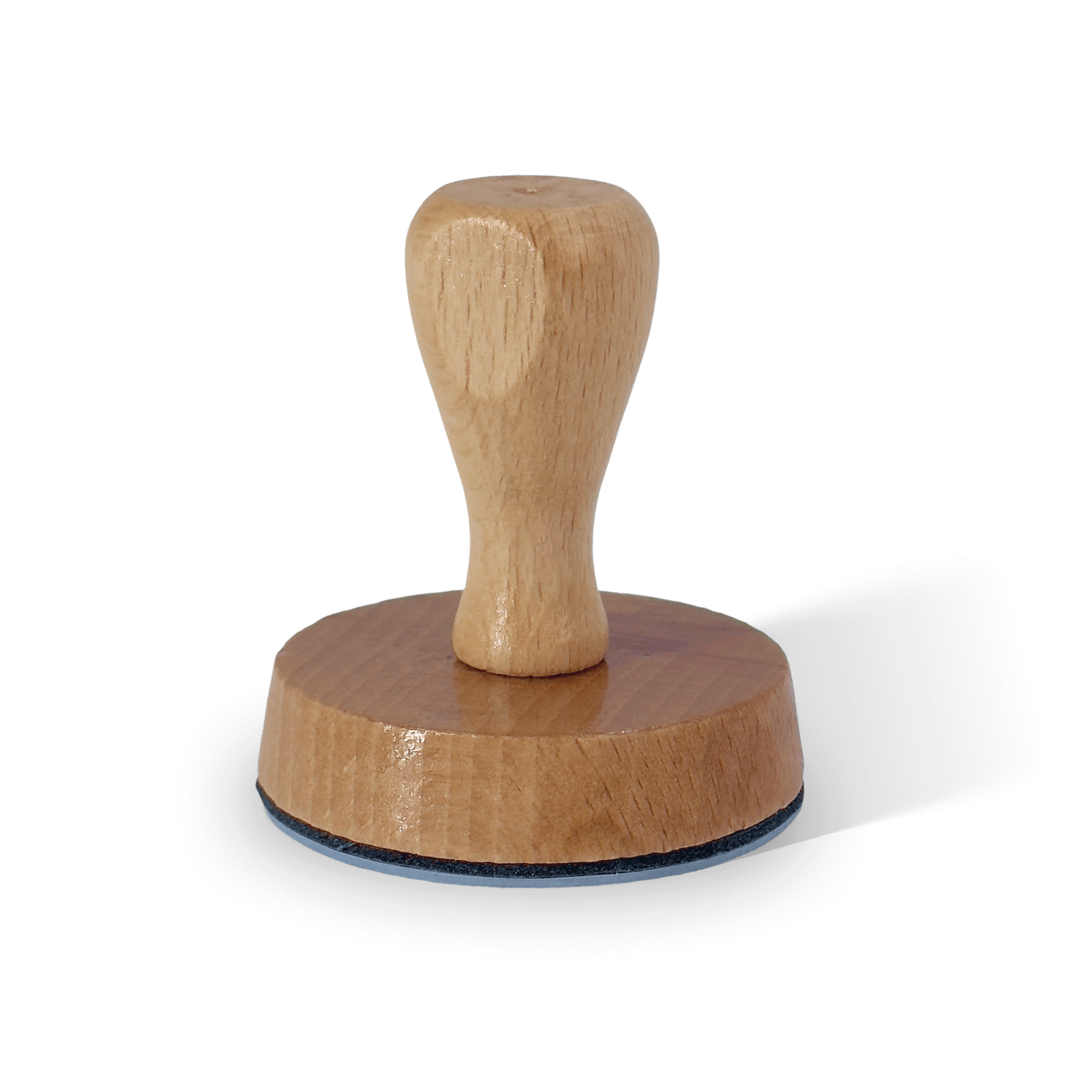
Personalized wooden stamp
5 compatible stampsFrom €22.00 -
Vintage round bookplate
5 compatible stamps€22.00 -
Cat initials stamp
5 compatible stamps€22.00 -
Ex-libris stamp with Gothic initials
5 compatible stamps€22.00 -
Elegant letter stamp
5 compatible stamps€22.00 -
Old initials stamp
5 compatible stamps€22.00 -
Round embossed stamp
5 compatible stamps€22.00 -
Large letter stamp
5 compatible stamps€22.00 -
Stamp with initials in line
5 compatible stamps€22.00 -
Stamp with the bride and groom's initials
5 compatible stamps€22.00


Thank you for your interest!
We will keep you updated as soon as the product is back in stock.


The Monogrammed Bookplate embodies the subtle art of personalizing one's library with timeless elegance, transforming each book into a testament to your literary heritage. This centuries-old tradition, once reserved for the European aristocracy, is experiencing a revival thanks to the French craftsmanship of Pop-Stamp . Far more than a simple stamp, the monogrammed bookplate becomes the refined signature of the contemporary bibliophile, blending the heritage of heraldic codes with the modernity of bespoke personalization. In our Grenoble workshop, each creation is born from the encounter between traditional engraving and technical innovation, offering book lovers an exceptional mark that transcends generations.
The aristocratic legacy of the ex-libris monogram in bibliophilic art
The history of the bookplate monogram has its roots in 15th-century European courts, where nobles marked their precious manuscripts with a personal seal intertwining their initials. This practice, initially reserved for princely libraries, reflected both the social status and the literary passion of its owner. The earliest monograms engraved on copper featured complex interlacing patterns, often adorned with family coats of arms and Latin mottoes, creating a truly distinctive visual heritage.
The gradual democratization of printing in the 16th century broadened the use of monogrammed bookplates to include educated members of the bourgeoisie, doctors, lawyers, and scholars who wished to affirm their membership in the intellectual elite. Engraving workshops in Paris and Lyon then developed refined techniques, blending Gothic calligraphy with Renaissance ornamentation. This evolution marked the birth of a specifically French decorative art, characterized by the elegance of its lines and the subtlety of its compositions.
From the court of Versailles to bourgeois libraries
Under Louis XIV, the monogrammed bookplate experienced its golden age with the creations of Pierre-Simon Fournier and Nicolas Cochin, who codified the aesthetic rules still respected today. Their designs for the royal library established the canons of the French monogram: intertwined initials within an ornate cartouche, a perfect balance between legibility and ornamentation, and the use of symbols evoking wisdom and knowledge. This tradition of excellence continued until the Revolution, then was revived in the 19th century by private collectors.
Contemporary Renaissance and Modern Craftsmanship
The 20th century saw the emergence of a new approach to the bookplate monogram, freed from heraldic constraints yet respectful of traditional aesthetic codes. Contemporary designers, such as those at the Pop-Stamp workshop, reinterpret this heritage by offering refined monograms, adapted to current tastes while preserving the nobility of the craft. This revival relies on perfected engraving techniques, allowing for unparalleled line delicacy and exceptional durability.
Create your own personalized bookplate stamp: the art of typographic harmony
Designing a personalized bookplate requires a methodical approach that combines creativity with respect for classic proportions. At Pop-Stamp , our personalization process begins with an analysis of your initials and aesthetic preferences, guiding each client toward the most harmonious solution. The arrangement of letters follows precise rules: the first letter generally precedes the last letter, except in compositions where visual balance dictates a different order.
Choosing the right typography is a crucial step in your project. Our graphic designers are proficient in a range of twelve typeface families, from medieval Gothic and Art Deco designs to elegant 18th-century English scripts. Each style conveys a particular atmosphere: Gothic typefaces evoke monastic tradition, classic Roman typefaces suggest an ancient heritage, while modern scripts reflect a refined contemporary sensibility.
Interlacing techniques and visual composition
The intertwining of initials represents the very essence of a successful monogram. Our artisans apply the compositional rules inherited from master engravers: the dominant letter, usually that of the surname, structures the whole, while the others are arranged around it. The connections between letters can be floral, geometric, or calligraphic, creating a coherent whole where each element finds its natural place.
The ornamental dimension harmoniously complements the monogram without weighing it down. Our designs incorporate subtle motifs: stylized foliage, decorative lines, and clean cartouches that frame the initials without overwhelming them. This approach guarantees an elegant, legible, and timeless result, capable of transcending trends without losing its aesthetic appeal.
Advanced customization and creative options
Beyond the traditional monogram, Pop-Stamp offers personalized enhancements: integration of a family motto, addition of professional symbols (caduceus, scales of justice, artist's palette), or creation of a simplified coat of arms. These elements, treated with the same meticulous attention to detail as the main initials, transform your bookplate into a true miniature work of art, unique and meaningful.
Technical specifications of monogram embossing presses
The monogram embossing presses in our professional range meet the most stringent requirements for precision and durability. Our collection comprises three main series: the EM models for circular monograms from 32 to 50 mm, the EH for square formats from 25 to 45 mm, and the ELR for custom rectangular designs. Each press is machined in our Grenoble workshop to tolerances of 0.02 mm, guaranteeing a perfectly crisp impression on all types of materials.
The mechanical design of our presses prioritizes ease of use without compromising the quality of the result. The leverage system allows for a pressure of 2 tons per square centimeter with minimal effort, ensuring deep and consistent embossing even on the thickest papers. The hardened steel jaws, ground to the micron, maintain perfect parallelism, guaranteeing uniformity of the impression across the entire surface of the monogram.
Range of formats and specific applications
The choice of format depends on the intended use and the style of your library. 32 mm monograms are perfectly suited to paperbacks and standard-sized books, offering a discreet yet assertive presence. Diameters of 41 and 50 mm are ideal for fine books, hardcover editions, and bibliophile volumes, creating a visual impact commensurate with the book's prestige.
Square and rectangular formats allow for freer compositions, particularly suited to complex monograms incorporating mottoes or extensive ornamentation. This dimensional flexibility, unique in our offering, meets the most demanding requirements of discerning collectors and bibliophiles.
The excellence of French engraving in the Pop-Stamp workshop
The monogram bookplate engraving practiced in our Grenoble workshop perpetuates a sixty-five-year-old tradition of excellence. Our master engravers, trained in traditional techniques and then introduced to contemporary technologies, have mastered the delicate art of direct engraving on copper and brass. Each plate is engraved individually, guaranteeing a quality and finesse unmatched by industrial mass production processes.
The creative process begins with the creation of a preliminary scale drawing, approved by the client before final engraving. Our artisans use hand-forged burins, sharpened at precise angles to achieve perfectly crisp lines. The actual engraving is carried out under a binocular microscope, with each line checked and corrected as needed. This artisanal method, while more time-consuming than laser engraving, produces reliefs with clean edges and perfectly fluid curves.
High-quality materials and exceptional durability
Our printing plates are made of 99.9% pure electrolytic copper, a high-quality material offering exceptional wear resistance while allowing for extremely fine engraving. This choice, more expensive than industrial alloys, guarantees durability for tens of thousands of impressions without any loss of quality. Copper, naturally antibacterial, also preserves the hygiene of your bookplate with repeated handling.
The press supports, machined from treated stainless steel, are highly resistant to corrosion and deformation. This mechanical robustness, combined with our 2-year warranty , makes our presses a lasting investment for discerning bibliophiles. Minimal maintenance—simple cleaning with alcohol and annual lubrication of the joints—preserves optimal performance over the long term.
Technical innovation and respect for tradition
The Pop-Stamp workshop combines technological innovation and traditional craftsmanship, using state-of-the-art equipment and proven methods. Our CNC lathes allow for machining of unparalleled precision, while the final engraving remains entirely manual. This hybrid approach guarantees dimensional consistency in mechanical parts while preserving the handcrafted essence of each creation.
Applications and uses of the family bookplate in the contemporary library
The family bookplate now finds numerous applications in the contemporary world of book collecting, far exceeding its traditional role as a marker of ownership. Collectors use it to structure their acquisitions by theme, period, or provenance, creating a veritable visual map of their library. This systematic approach facilitates the management of loans and exchanges between book collectors, while simultaneously affirming the owner's identity.
In a professional context, lawyers, doctors, and academics adopt monogrammed bookplates to personalize their reference works and specialized publications. This practice, particularly prevalent among the liberal professions, reflects a desire for excellence and distinction that enhances their professional image. Accounting firms and notaries also use this mark for their collections of codes and case law, creating a valuable visual consistency.
Heritage transmission and cultural legacy
The monogrammed bookplate is a powerful means of passing on heritage, allowing book lovers to bequeath not only their books but also their identity as readers. This transgenerational dimension transforms the library into a true family heirloom, where each generation can add its own touch while respecting the legacy received. Bibliophile families thus develop evolving traditions of bookmarking, enriching the initial monogram with personal elements.
Cultural institutions—municipal libraries, documentation centers, literary foundations—also adopt the monogrammed bookplate to identify their specialized collections and private donations. This practice preserves the memory of donors while facilitating collection management, creating a lasting link between the institution and its benefactors.
Contemporary creativity and new trends
The new generation of bibliophiles is reinventing the use of the monogrammed bookplate, adapting it to digital media and contemporary reading practices. Some create digital versions of their monogram to mark their electronic libraries, while others use it as a signature on their literary blogs and specialized social networks. This evolution testifies to the vitality of a traditional art form capable of adapting to new modes of cultural consumption.
A practical guide to choosing your monogram dry stamp
Choosing a monogrammed dry stamp requires careful consideration of your reading habits and the composition of your library. Eclectic readers will likely prefer a simple, timeless monogram that complements all types of books, from hardcover classics to contemporary editions. Conversely, specialized collectors may opt for more ornate designs that reflect their area of interest: scientific motifs for technical works, floral designs for romantic literature.
Frequency of use also influences the choice of format and materials. A bibliophile who regularly acquires new books will benefit from a robust, large-format press, allowing for quick and efficient marking. Occasional readers or collectors of rare books will prefer more compact models, less bulky and perfectly suited to delicate materials.
Technical and aesthetic selection criteria
Assessing your needs requires considering several technical parameters: the average size of your books determines the optimal monogram diameter, while the type of paper (laid, vellum, or modern paper) influences the engraving depth. Our Pop-Stamp consultants analyze these elements to guide you toward the most suitable solution, guaranteeing optimal results across your entire collection.
The aesthetic harmony between your monogram and your reading environment deserves special attention. A classically styled office will perfectly complement a bookplate with heraldic references, while a contemporary interior will call for more minimalist designs. This stylistic consistency enhances the visual impact of your monogram and affirms your bibliophilic personality.
Maintenance and care of your homemade waffle press
The exceptional longevity of our handcrafted embossing presses stems from both the quality of their design and the care taken with their regular maintenance. Monthly cleaning with a soft cloth lightly dampened with isopropyl alcohol removes paper residue and preserves the sharpness of the embossing. This simple operation, completed in just a few minutes, maintains optimal print quality and prevents the accumulation of particles that could impair the fineness of the embossing.
Semi-annual lubrication of joints and pivot points ensures smooth operation and prevents premature wear of moving parts. We recommend using a neutral, non-staining, food-grade white grease, applied sparingly to friction areas. This preventative maintenance, detailed in our maintenance guide provided with each press, preserves mechanical precision and ease of use over the long term.
Optimal storage and protection of matrices
Storing your press in a dry, temperate environment protects the materials from oxidation and thermal deformation. We recommend using our solid wood storage case, specially designed to hold the press and its accessories in individual compartments. This optimal protection prevents bumps and scratches while facilitating transport when you travel.
The engraved matrix, the most delicate element of the entire piece, receives special care. It is cleaned exclusively with a soft, natural-bristle brush, avoiding any contact with abrasive materials that could damage the engraving. A transparent protective film, supplied with each creation, preserves the finest details during periods of prolonged disuse.
The Monogrammed Bookplate represents far more than a simple bibliophilic mark: it embodies the French art of living, that pursuit of excellence and refinement that characterizes our cultural heritage. By choosing a Pop-Stamp creation, you perpetuate a centuries-old tradition while asserting your unique identity as a contemporary bibliophile. Our artisanal expertise, enriched by sixty-five years of experience, transforms your initials into a miniature work of art, capable of transcending generations without losing its nobility. Whether your library is just beginning or already established, the monogrammed bookplate will bring it that touch of timeless elegance that distinguishes true book lovers. Discover our collection today and let our master engravers bring your vision to life, creating the bookplate that reflects your personality and honors your literary passion.
A super result!
Thanks to my press to glue, I was able to personalize my business cards with a professional finish. Nothing to say.
Excellent service
Excellent service! Fast delivery, high-quality product and the website is really well thought out. I'm very satisfied.
Perfect ex-libris
I ordered an ex-libris seal with personalized design, and the result is truly amazing! The design is unique and elegant, and the use of the seal is incredibly easy.
Wooden stamps
solid and durable
An ecological press
without consumables, without waste


24h delivery
Quickly made and shipped within 24 hours after approval of the design
Made in the Alps
Printing and engraving in our workshop, at the feet of the Alps, since 1990 with the greatest care
Quality guaranteed
Our products are guaranteed for 2 years, high quality materials for excellent reliability
At your service
A family business focusing on customer service with satisfaction as a priority
- Choosing a selection results in a full page refresh.
